
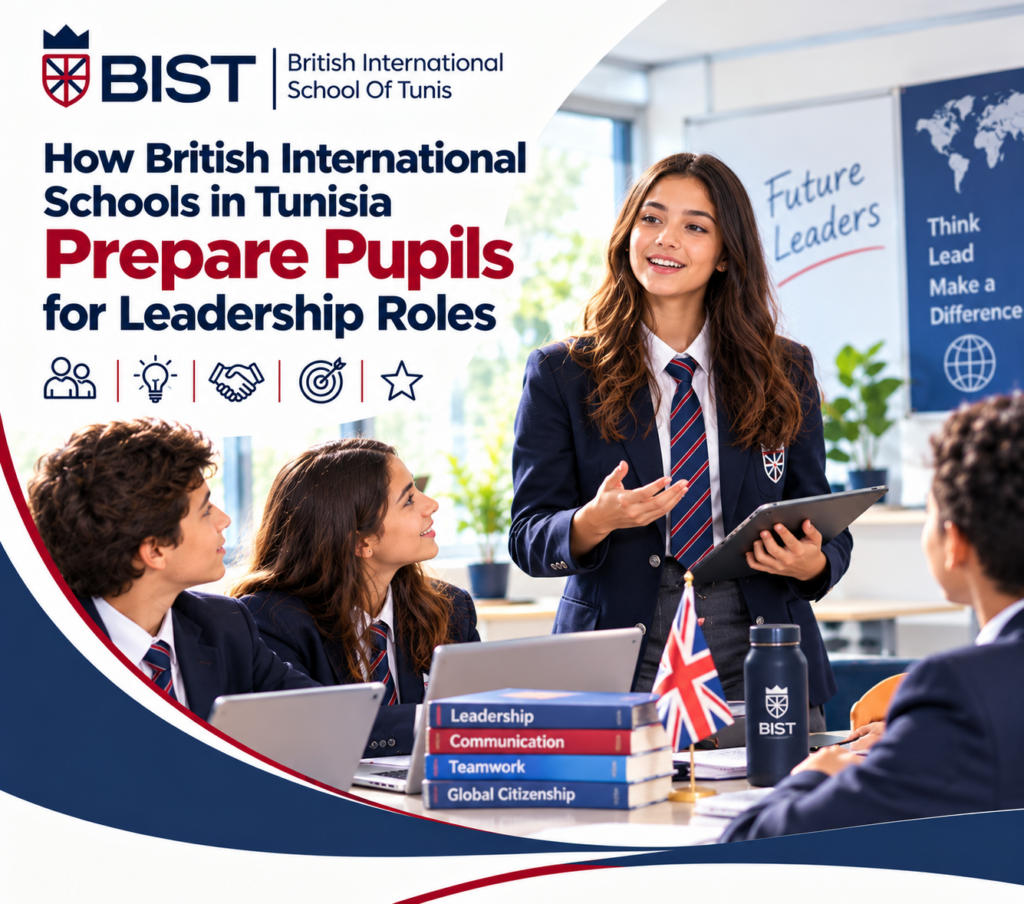
Leadership is more than a skill, it is a mindset and a journey that shapes success in higher education, professional life and meaningful community engagement. Recognising this, British international schools in Tunisia prioritise the holistic development of leadership qualities in pupils from an early age, preparing them not only to excel academically but also to become confident, ethical and proactive leaders of tomorrow.
Leadership Opportunities Across School Life
British international schools provide a wide range of structured leadership opportunities embedded throughout the school experience. These include elected or appointed roles such as:
Pupil Councils: Pupils represent their peers, voice opinions, and contribute to school improvement initiatives. This fosters democratic participation and accountability.
Prefects and Senior Pupil Roles: Older pupils are entrusted with responsibilities such as mentoring younger pupils, supporting school discipline, and organising events, cultivating maturity and integrity.
Club and Committee Leadership: From sports teams to arts clubs and academic societies, pupils learn to plan, coordinate and motivate groups, gaining practical organisational skills.
By offering diverse leadership roles, schools empower pupils to experience responsibility firsthand, developing critical organisational and communication abilities that are transferable across all areas of life.
Developing Essential Soft Skills for Leadership
Leadership at British international schools extends well beyond titles and formal roles. Dedicated leadership programmes focus on nurturing soft skills essential for effective leadership, including:
Teamwork: Pupils engage in collaborative projects that require cooperation, negotiation and mutual support.
Problem-Solving: Real-world challenges and case studies encourage creative thinking and strategic decision-making.
Conflict Resolution: Pupils learn to manage disagreements constructively, promoting empathy and understanding.
Ethical Decision-Making: Guided discussions and reflections help pupils consider the impact of their choices on others and develop a strong moral compass.
These skills are cultivated through interactive workshops, role-playing exercises and leadership retreats, embedding the values of leading by example and inspiring others to achieve shared goals.
Community Engagement and Global Citizenship
A core dimension of leadership development in British international schools in Tunisia is a commitment to community and global citizenship. Pupils are encouraged to participate in:
Local Community Service: Initiatives such as environmental clean-ups, charity fundraising and volunteering help pupils develop empathy and a sense of social responsibility.
International Projects and Exchanges: Through collaborations with schools abroad and participation in Model United Nations (MUN) or other global forums, pupils expand their worldview and appreciate cultural diversity.
This emphasis on community engagement nurtures leaders who are socially conscious, globally aware and motivated to make positive change beyond the classroom.
Building Confidence and Resilience
Effective leaders need confidence and resilience to face challenges, communicate persuasively and adapt to changing circumstances. British international schools create numerous platforms to cultivate these attributes:
Public Speaking and Debates: Regular opportunities to speak in assemblies, participate in debates and deliver presentations help pupils develop poise and clarity.
Leadership Challenges: Managing school events, resolving conflicts and balancing academic and leadership responsibilities strengthen problem-solving skills and emotional resilience.
Mentoring and Reflection: Guided mentorship from teachers and senior pupils supports self-awareness and growth mindset.
These experiences equip pupils with the mental agility and self-assurance required to lead successfully in diverse environments.
Preparing for University and Beyond
Leadership development in British international schools is intentionally aligned with the expectations of higher education and professional life. Universities seek candidates who demonstrate initiative, teamwork, and ethical leadership, qualities cultivated through the varied opportunities provided in school.
By the time pupils graduate, they are prepared to:
Lead pupil organisations and projects at university.
Collaborate effectively in multicultural teams.
Navigate challenges with resilience and integrity.
Pursue leadership roles in their chosen careers with confidence.
This holistic leadership education gives pupils a competitive edge, setting a strong foundation for lifelong success.
Leadership is a journey nurtured over time through experience, reflection and guidance. British international schools in Tunisia provide an environment rich with opportunities, support and challenges that help pupils grow into capable, compassionate leaders.
For parents seeking an education that develops not just academic excellence but the character and skills needed for the future, British international schools offer a proven pathway to leadership success.
