
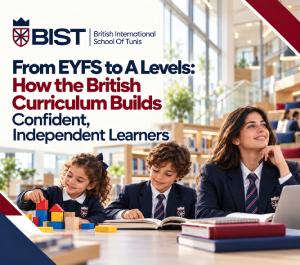

One of the defining features of British education is its coherence. Each stage of learning is designed to support the next, creating a seamless educational journey from early childhood through to university preparation.
For parents in Tunisia, understanding how the British curriculum functions across different age groups is key to appreciating its long-term value.
Early Years Foundation Stage (EYFS): Learning Through Exploration
EYFS focuses on social development, communication and early literacy through play-based learning. Children develop confidence, curiosity and emotional security, foundations that underpin all future learning.
This approach is particularly beneficial in multicultural environments, helping children adapt quickly and develop positive attitudes towards school.
Primary Education: Building Core Skills
During primary years, pupils develop strong foundations in English, mathematics and science while being encouraged to explore creativity and independent thinking. Assessment is continuous and supportive rather than punitive.
Parents often appreciate the emphasis on confidence-building and individual progress at this stage.
IGCSEs: Academic Maturity
IGCSEs introduce structured assessment and subject specialisation. Pupils learn responsibility, time management and analytical thinking, skills essential for higher education.
This stage bridges childhood learning with academic maturity, preparing pupils for increased independence.
A Levels: Preparation for the Future
A Levels allow pupils to specialise deeply and align studies with career aspirations. The depth of knowledge gained is highly valued by universities worldwide.
Throughout this journey, the British curriculum prioritises learner autonomy, critical thinking and self-confidence, qualities that extend far beyond the classroom.
