
In today’s digital age, technology plays an essential role in shaping how children learn. British international schools in Tunisia are at the forefront of integrating innovative digital tools to create engaging, effective, and personalised learning experiences that prepare pupils for the future.
Interactive and Engaging Lessons
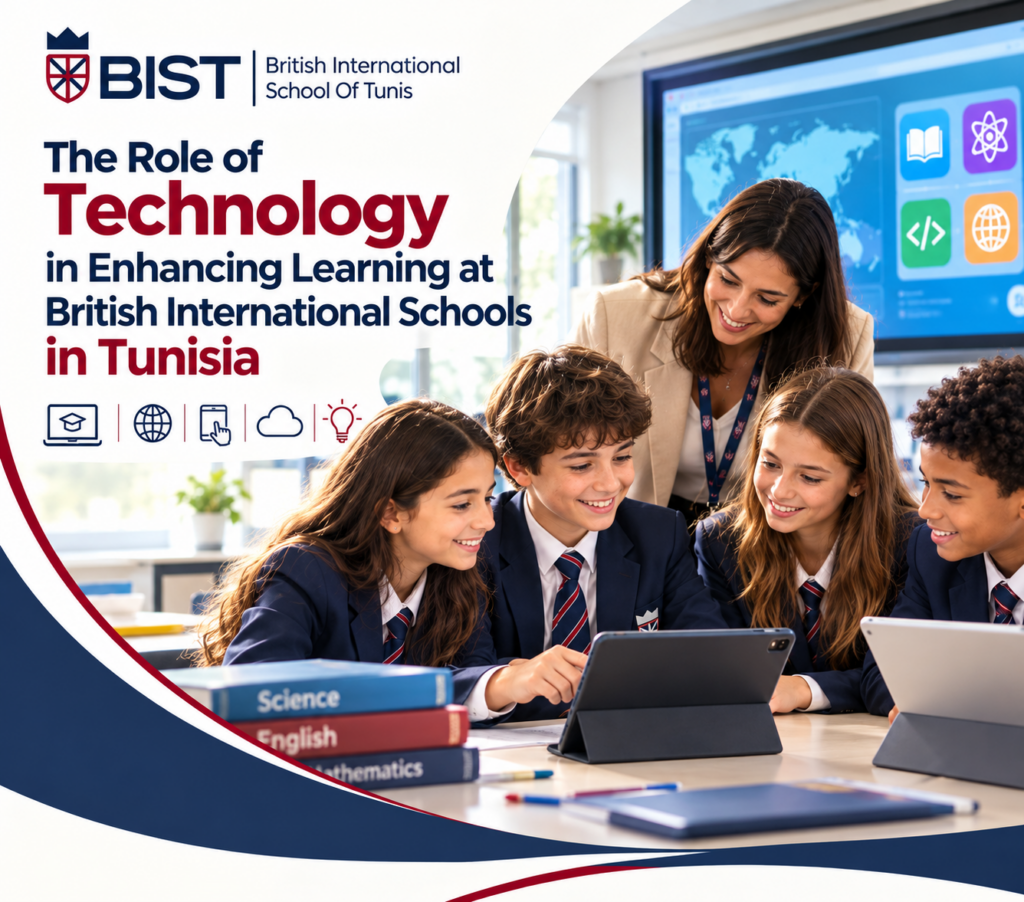
Classrooms in British curriculum schools often feature interactive whiteboards, tablets, and educational software that transform traditional lessons into dynamic learning experiences. This technology enables pupils to engage actively with content, whether through virtual experiments in science, interactive storytelling in English, or maths games that reinforce concepts.
Access to Global Resources
Digital platforms provide pupils with access to vast online libraries, research tools, and educational videos. Pupils in Tunisia benefit from resources that connect them to global knowledge and perspectives, enhancing their understanding of subjects beyond textbooks.
Supporting Different Learning Styles
Technology enables personalised learning, adapting to individual pupils’ strengths and areas for improvement. For example, pupils can learn at their own pace with tailored exercises or receive instant feedback through online quizzes, helping them consolidate knowledge effectively.
Preparing Pupils for a Digital Future
Digital literacy is a key skill for the 21st century. British international schools ensure pupils develop proficiency in computer science, coding, and safe internet practices, equipping them for a wide range of future careers.
Blending Tradition and Innovation
While embracing technology, British international schools in Tunisia maintain a balance with traditional teaching methods, fostering critical thinking, creativity, and interpersonal skills through face-to-face interactions.
Parent Engagement and Transparency
Many schools offer online portals where parents can track academic progress, homework, and communicate with teachers, fostering transparency and partnership in education.
